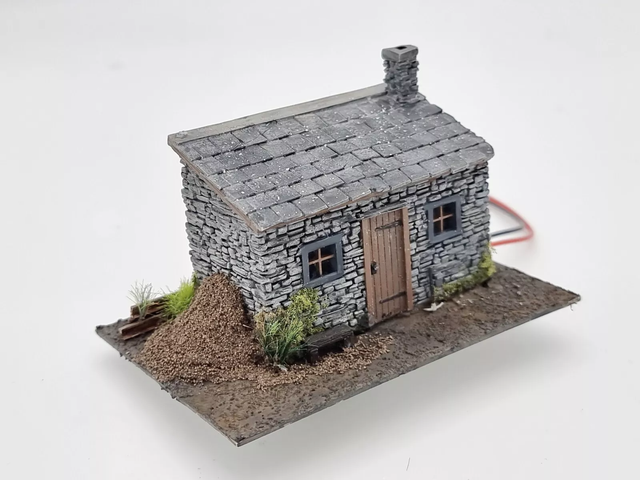
There's something reassuring about an old building.
Not because it's perfect. Often quite the opposite. The paint has faded, the metalwork is rusting, the edges have softened, and nature has quietly begun to weave itself into the structure. Grass gathers at the base of the walls. Moss settles around a leaking gutter. Roots find the cracks.
These details do more than decorate a building. They tell its story.
When I'm building a lineside hut, I find myself thinking less about the structure and more about its relationship with whatever surrounds it. A new hut serves a purpose. An old one belongs. Somewhere between the two, the distinction blurs — the building stops sitting within the landscape and becomes part of it.
That sense of belonging is what I'm trying to capture.
What Nature Leaves Behind
The passage of time is hard to recreate, but easy to recognise. A hut beside a forgotten siding, a maintenance shed at the edge of a field — both carry quiet clues about their history. Weather, use and neglect all leave their mark. So does nature.
A patch of moss on a roof suggests years rather than days. Ivy on a wall hints at seasons passing, routines changing, the landscape gradually settling around the building. It's the difference between a structure that feels established and one that feels placed.
Growth Doesn't Follow a Plan
Part of what makes vegetation so interesting to model is that it never repeats itself. No two walls are covered in the same way. No two climbing plants take the same path.
The vegetation on my huts is built up from fine nylon threads coated with sawdust, layered in different green tones. Vines, ivy and creeping plants develop their own character as they're made — small variations appear on their own, and no two attempts come out quite alike.
I've stopped trying to fight that. The unpredictability is the point. It's how nature behaves, and it's what gives each hut its own individuality — something grown rather than manufactured.
A Sense of Place
The greenery isn't there to add detail. It's there to create atmosphere.
A few strands of grass, a patch of moss, one climbing plant — that's often enough to change how a piece reads. The building starts to feel rooted. It becomes part of a scene rather than an object sitting in one.
The most convincing layouts and dioramas tend to share this quality. The structures feel settled, as though they've stood in the same spot for decades — a world that existed before you arrived, and will carry on after you've gone.
Every hut I make is built with that feeling in mind. Not just a railway building, but a small piece of living landscape — one where time has passed, nature has left its mark, and a simple structure has quietly become part of the story around it.
The most memorable buildings are rarely the newest ones. They're the ones that look as though they've always been exactly where they are.
There's a selection of model railway lineside huts in the shop — each with its own character, and its own sense of history.